The Vegetarian Isn't a Side Dish: A Mixed-Diet Takeout Table at Beijing Kitchen NJ
Photo: Shwangtianyuan, CC BY-SA 4.0, via Wikimedia Commons
Ordering takeout for a mixed-diet group usually goes one of two ways. Either the vegetarian gets a container of plain broccoli and a polite shrug, or everyone orders vegetable dishes and the meat-eaters spend the drive home talking about dumplings. Neither makes for a great dinner. The better approach is to build a table, not a compromise. At Beijing Kitchen NJ, that means treating vegetable-forward regional Chinese plates as centerpieces, using a few shared bridge dishes to hold the meal together, and keeping containers and sauces organized so the vegetarian is not picking around someone else’s pork.
Start With a Shared Skeleton
Every cohesive Chinese takeout meal has a skeleton: starch, something saucy, something crisp, something fresh, and enough rice to absorb it all. For four eaters—one vegetarian, three omnivores—aim for five dishes plus rice. Two should be vegetable-led and substantial enough to count as a main. Two can be meat or seafood. The fifth is your bridge: a dish that pleases both sides and does not feel like a consolation prize. If your group eats a lot, add a sixth dish, but add it as an extra rather than replacing a vegetable centerpiece with another meat plate.
This is not about policing what anyone eats. It is about making sure the vegetarian has a real dinner and the meat-eaters still get the savory, salty, wok-fired flavors they ordered for. A mixed table works when the vegetable dishes are ordered with the same confidence as the meat dishes.
The Bridge Dishes Do the Social Work
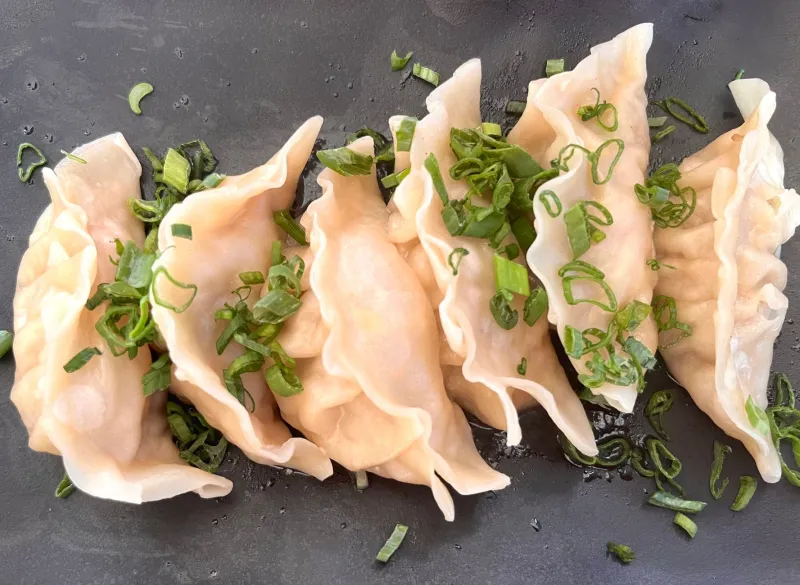
Scallion pancakes are the easiest bridge in the Chinese takeout playbook. They are crisp, a little chewy, and entirely vegetarian in most kitchens, and they give everyone something to reach for while the containers get opened. Vegetable dumplings are another strong move. They add heft, they reheat well, and they feel like food rather than a side note. Ask whether the dumpling filling includes egg or dairy if that matters to your group; then order enough that the vegetarian can make a meal of them, not just a sample.
Eggplant is the quiet hero of mixed-diet ordering. Garlic eggplant or eggplant in a savory brown sauce brings the glossy, soft, intensely seasoned quality that makes people forget they are eating vegetables. Dry-fried green beans are the crisp counterpoint: blistered, salty, and good straight from the container. If the menu offers tofu with mushrooms, cabbage with dried chilies, or a vegetable noodle, those can all serve as bridges too.
One caution: mapo tofu and some braised tofu dishes often contain pork or meat stock. Ask before assuming. The same goes for sauces that may include oyster sauce or fish sauce. A quick phone call or a note in the order can save the vegetarian from a disappointing surprise.
Make the Vegetable Dishes Main-Event Material
A common mistake is ordering three green sides and calling it vegetarian coverage. Instead, think in textures and heft. Choose one saucy vegetable—eggplant, braised tofu, or cabbage—one crisp vegetable—green beans, shredded potato, or mushrooms—and one starch that can anchor the plate. Rice is non-negotiable, but vegetable noodles or dumplings can give the vegetarian a second path through the meal.
At Beijing Kitchen NJ, the regional Chinese menu gives you room to build that kind of plate. Look for dishes that are cooked with garlic, chili, black vinegar, or sesame rather than simply steamed and parked next to the meat. The goal is a vegetarian dinner with the same salty-savory pull as everything else on the table.
If cross-contact matters, say so plainly when ordering. Takeout kitchens are busy, and a shared wok is normal. Ask whether a dish can be prepared with vegetable oil or kept away from meat sauces. Most places will do their best, but the request needs to be made at the time of ordering, not discovered at the table.
Container Strategy Is Menu Strategy
Container chaos is what turns a good mixed-diet order into a game of dietary detective. Request sauces on the side whenever possible. Keep meat dishes in their own containers and do not pour their sauces over the shared rice. If the vegetarian is sensitive to cross-contact, use the first few containers for vegetable dishes and set them aside before the meat comes out.
A few practical moves help. Label lids with a marker if you are feeding a crowd. Keep crispy items—scallion pancakes, fried tofu, green beans—vented on the ride home so they do not steam into softness. Store dumplings flat rather than stacked. Put rice in a wide container so it reheats evenly, and keep a plain batch of rice separate from any sauced dishes.
At home, reheat with a little care. Rice does well with a splash of water and a microwave cover. Noodles are better in a skillet with a teaspoon of oil. Crispy items can go into a 350°F oven for a few minutes, and dumplings can be steamed or pan-fried. Keep the vegetarian containers on their own side of the counter until everyone has served themselves.
A Workable Order for One Vegetarian and Three Meat-Eaters
A simple five-dish frame: scallion pancakes, vegetable dumplings, garlic eggplant, dry-fried green beans, and one meat dish for the table, plus rice. That gives the vegetarian pancakes, dumplings, eggplant, green beans, and rice—a full plate with crunch, sauce, starch, and variety. The meat-eaters get the same spread plus the meat dish. If the group is hungry, add a second meat dish or a tofu dish, but keep the vegetable centerpieces in place.
For sauces, set out chili oil, black vinegar, soy sauce, and a little sesame oil if you have it. Let people doctor their own plates. Shared condiments keep the vegetarian from feeling like an afterthought and let the meat-eaters add heat or acid without asking the kitchen to change the whole order.
The Table Still Feels Like One Meal
A mixed-diet takeout table does not need to be complicated. It needs vegetable dishes with real presence, a couple of bridge dishes that everyone reaches for, and a container plan that keeps the food separate without making the meal feel separate. Order the eggplant like you mean it. Get enough dumplings. Put the meat sauce on the side. Then sit down together and pass the rice. That is a Beijing Kitchen NJ dinner that works for the whole table.